
 By
By 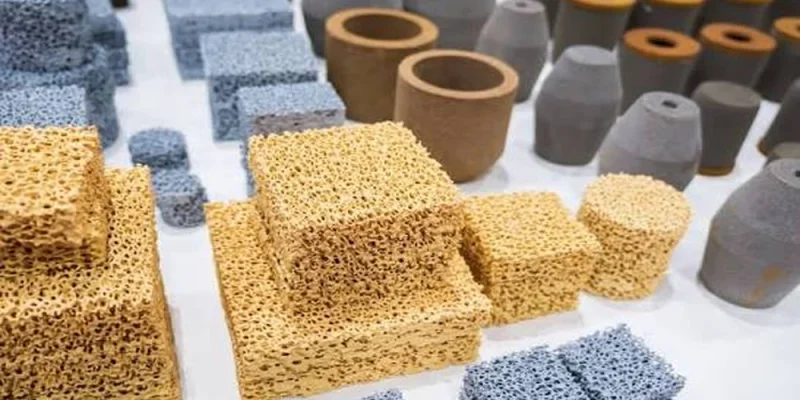
Polyurethane foam is one of the most versatile engineered materials in industrial use, appearing in applications that range from acoustic and thermal insulation to precision filtration, packaging protection, and the specialist technical foams that medical, automotive, and electronics manufacturing require. The properties of polyurethane foam, including its density, cell structure, hardness, and chemical resistance, can be engineered across a wide range to match the specific performance requirements of each application, which is why quality polyurethane foam manufacturers are capable of producing products that serve a single client’s requirements from both ends of the foam property spectrum. Understanding the different foam types, the applications that each serves, and what to look for in a foam manufacturer helps procurement teams and design engineers specify the right foam solution for technically demanding requirements.
What are the main categories of industrial foam?
Industrial foam from qualityfoam manufacturers is produced across several structural categories whose cell morphology, density, and material system determine the application suitability:
- Open-cell foam: foam in which the individual cells are interconnected, allowing air, fluid, and sound to pass through the foam matrix. Open-cell polyurethane is used in acoustic insulation, filtration, seating cushioning, and the packaging and gasket applications where compressibility and recovery are required
- Closed-cell foam: foam in which the individual cells are sealed, preventing the passage of air and liquid through the foam. Closed-cell foams provide thermal insulation, buoyancy, and the moisture resistance that open-cell foams cannot deliver
- Reticulated polyurethane foam: a specialist open-cell foam produced by a process that removes the cell membranes from the foam structure, leaving only the skeletal struts of the original foam. The reticulation process produces a foam with a high percentage of open volume, consistent pore geometry, and the low flow resistance that makes reticulated polyurethane foam the material of choice for air and liquid filtration applications
What is reticulated polyurethane foam and why is it used in filtration?
Reticulated polyurethane foam is produced by treating standard open-cell foam in a controlled process, typically using a chemical or explosive reticulation method, that removes the thin polymer membranes from the cell windows while leaving the structural struts intact. The result is a foam structure that is primarily open space, with a consistent three-dimensional network of polymer struts defining the pore geometry.
The properties of reticulated polyurethane foam that make it the preferred material for filtration applications include:
- Controllable pore size: the pore size of reticulated foam is characterised by the pores per inch (PPI) specification, which ranges from 10 PPI for coarse filtration to 80 or 100 PPI for fine filtration. The PPI specification allows the foam to be matched to the particle size range that the application requires to capture
- Low pressure drop: the absence of cell membranes means that reticulated foam presents significantly lower resistance to airflow or fluid flow than equivalent-density standard open-cell foam, which is critical in filtration applications where pressure drop across the filter element must be minimised
- Cleanability: reticulated polyurethane foam can be washed and dried repeatedly without significant deterioration of the foam structure or the pore geometry, making it suitable for the cleanable and reusable filter element applications in HVAC, automotive, and industrial equipment
- Consistent pore geometry: the regular, repeatable pore structure of reticulated foam produces predictable and consistent filtration efficiency, unlike natural fibrous materials whose random fibre arrangement produces variable filtration performance
What is filter foam and how is it specified?
Filter foam is reticulated polyurethane foam supplied in the sheet, roll, or custom-cut form for installation in filter housings, HVAC units, power tool dust collection, automotive cabin filters, and the industrial filtration applications where the combination of filtration efficiency, flow resistance, and cleanability that foam provides cannot be matched by paper or synthetic fibre media.
Filter foam sheet is the most commonly supplied form, available in standard thicknesses from 10 millimetres to 50 millimetres or above, and in standard sheet sizes that can be cut to the specific dimensions of the filter housing. Custom cutting to exact housing dimensions is offered by specialist foam manufacturers whose fabrication capability supports the full range of standard and non-standard filter element geometries.
The specification of a filter foam sheet for a specific application requires the selection of:
- PPI rating: matched to the particle size that the application needs to capture and the acceptable pressure drop across the filter. Lower PPI for coarser filtration and lower pressure drop; higher PPI for finer filtration at higher pressure drop
- Thickness: thicker foam provides higher dust-holding capacity and extends the interval between cleaning or replacement, at the cost of increased initial pressure drop
- Material grade: standard polyurethane for general filtration; polyether grade for applications requiring hydrolysis resistance in humid or wet environments; polyester grade for elevated temperature or solvent-exposed applications
What foam solutions do polyurethane foam manufacturers provide beyond filtration?
Quality foam solutions from established polyurethane foam manufacturers extend well beyond filter foam into the full range of technical foam applications:
- Packaging foam: custom-cut and profiled foam inserts for protective packaging of precision instruments, electronics, medical devices, and fragile components whose transit protection requires foam engineered to the product’s geometry and shock vulnerability
- Acoustic foam: open-cell foam for sound absorption in studios, equipment enclosures, HVAC ductwork, and the architectural acoustic applications where noise reduction is the primary requirement
- Gasketing and sealing foam: closed-cell and open-cell foam in die-cut gasket forms for dust and moisture sealing in electronic enclosures, automotive components, and building envelope applications
Kare Foam is an established polyurethane foam manufacturer and supplier of foam solutions, reticulated polyurethane foam, filter foam, and filter foam sheets for industrial, automotive, HVAC, and precision filtration applications. As a specialist foam manufacturer with in-house fabrication capability, Kare Foam supplies standard and custom foam products to the dimensional and performance specifications that technical industrial applications require, with the material expertise and supply consistency that professional procurement depends upon.















Comments