
 By
By 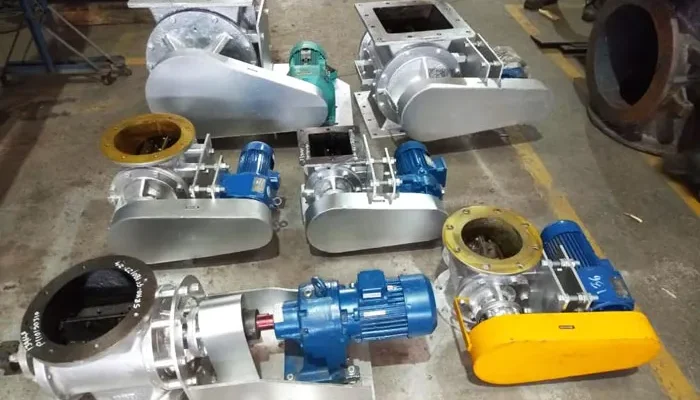
Steady movement of fine materials helps production units maintain regular output while preventing unwanted loss during transfer stages. Rotary airlock valves guide controlled discharge through enclosed equipment where measured flow supports balanced operation across connected processing sections.
Accurate feeding improves material management while reducing operational disturbance across systems that rely on careful mechanical movement. Many industries study dependable feeding equipment during system planning because correct selection ensures stable transfer performance recommended by rotary valve manufacturers.
How Do Feeding Systems Maintain Stability
Steady material delivery depends on a well-designed rotation that releases balanced quantities at regular intervals. Rotary airlock valves help maintain continuous movement of bulk powder through enclosed machinery while supporting smooth transition between connected chambers.
What Supports Smooth Material Transfer
Material transfer becomes reliable when chamber motion guides particles evenly into the next stage. Accurate rotation inside valves allows powders to pass through controlled openings without creating irregular flow conditions. When internal structure supports balanced movement systems, it maintains steady feeding during extended operations, a standard maintained by experienced rotary valve manufacturers through precision engineering.
- Balanced chamber rotation guides material gently through enclosed equipment sections
- Smooth internal surfaces assist powder movement without sudden build-up issues
- Accurate rotor positioning improves reliable feeding through controlled discharge motion
- Strong outer housing protects rotation stability during demanding transfer conditions
- Correct chamber spacing helps maintain steady product movement across equipment lines
Why Precision Engineering Improves Performance
Precision design supports reliable feeding because each moving part works with minimal friction during operation. Careful fitting within valves helps maintain accurate material passage while protecting mechanical alignment through continuous rotation cycles.
- Accurate machining keeps internal movement steady throughout long working cycles
- Tight component alignment improves controlled feeding without unnecessary leakage risk
- Stable rotor balance supports smooth turning during extended powder handling processes
- Protective internal surfaces guard equipment from particle abrasion during rotation
- Proper structural strength maintains dependable operation across continuous transfer systems
How Can Feeding Systems Improve Reliability
Reliable feeding grows from thoughtful equipment design, careful installation, and routine monitoring. Rotary airlock valves help maintain stable transfer between connected machinery when the rotation clearance structure matches handling requirements. Consistent powder movement protects production flow while lowering material loss across sealed processing arrangements.
Smooth powder transfer depends on correct equipment choice, strong structure, and careful inspection routines. When systems follow balanced design principles, feeding patterns remain stable across processing operations. Careful attention to rotor fitting internal alignment, airflow guidance, and supports dependable material passage through equipment. Industries focusing on well-built feeding devices often gain cleaner operation, steady output, and controlled transfer movement throughout demanding production activity.
FAQ
How do feeding systems maintain steady powder movement inside enclosed processing units?
Balanced rotation guides material evenly while keeping the internal flow steady continuously.
What factors improve stable powder discharge through controlled feeding equipment systems?
Accurate rotor motion, proper installation and maintenance, support smooth, dependable material passage.
Why is precision engineering important for continuous bulk material transfer reliability?
Careful design alignment, strong structure, and keep feeding motion stable during operations.
















Comments