
 By
By 
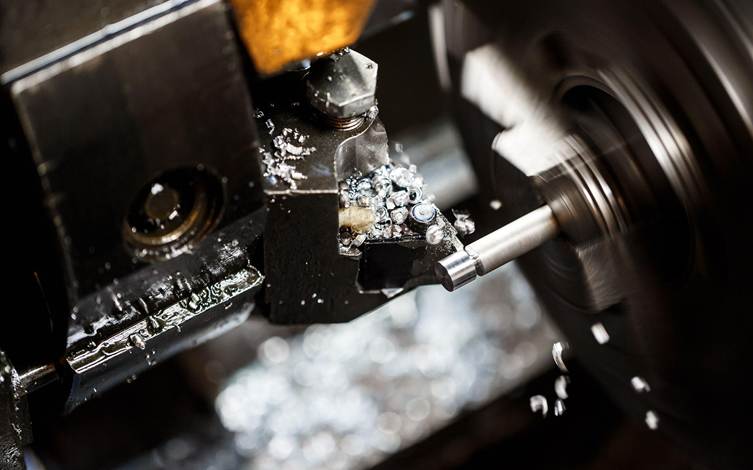
Automotive production demands strict accuracy, stable quality, and reliable output across every component. Even a minor deviation can affect engine performance, fuel efficiency, safety, or long-term durability. As designs grow more complex and consumer expectations increase, traditional machining methods struggle to keep pace with modern requirements. Computer numerical control (CNC) machining, which uses programmed digital instructions to cut and shape materials with precision, supports these demands by creating consistent and repeatable results. For this reason, automotive manufacturers frequently partner with a CNC machine shop to strengthen part reliability and improve workflow efficiency. Understanding why this partnership matters gives production teams clearer insight into achieving dependable performance.
1. Tight Tolerances Are Essential For Engine Performance
In order to facilitate combustion, airflow, lubrication, and temperature stability, engine components must maintain precise dimensions. Even a small deviation in a part might lead to friction, pressure imbalances, or early wear. A CNC machine shop maintains precise tolerances through automated programming and controlled machining conditions. This accuracy is used in automotive machining to guarantee that valve bodies, crankshafts, pistons, and other parts satisfy precise requirements for smooth operation.
2. Consistency Across High Volumes Prevents Assembly Issues
Automotive production relies on high-volume manufacturing, where thousands of identical components must be built without modifications. Manual machining cannot maintain this level of uniformity. CNC techniques produce homogeneous parts across large batches, decreasing assembly errors and minimising the requirement for rework. By maintaining dimensional accuracy from the first to the last unit, automotive machining promotes mass production stability.
3. Complex Geometries Require Advanced Cutting Capabilities
Modern automotive parts include multi-angled surfaces, internal channels, and weight-reducing features that enhance performance. These shapes exceed the limits of traditional machining tools. A CNC machine shop uses multi-axis systems that accommodate complex geometries without compromising accuracy. This capability supports innovation in engine design, drivetrain components, and structural assemblies.
4. Stronger Surface Finishes Improve Wear Resistance
Surface finish affects how automotive components withstand friction, temperature changes, and long-term wear, especially when using a CNC machine for automotive industry applications. Rough or inconsistent finishes create hotspots and early degradation. CNC machining provides smooth, controlled surface quality by maintaining stable feed rates and tool engagement. Automotive machining relies on this consistency to improve durability in parts exposed to constant motion, such as bearings, shafts, and gear interfaces.
5. Material Flexibility Supports Advanced Engineering
Automotive components use a wide range of materials, including aluminum, cast iron, stainless steel, and high-strength alloys. Each material requires specific cutting speeds, tooling, and strategies. A CNC machine shop applies the right machining techniques for each material type, ensuring that strength and structural integrity remain intact. Automotive machining benefits from this adaptability when working with lightweight alloys designed to enhance efficiency or reduce emissions.
6. Faster Lead Times Reduce Production Delays
Automotive schedules operate on strict timelines, and delays affect assembly plants, supplier networks, and delivery commitments. Manual setups and repeated adjustments slow production. CNC machining reduces delays by using programmed cycles that run predictably and consistently. A CNC machine shop supports faster turnaround times, allowing automotive teams to meet tight deadlines without sacrificing quality.
7. Reliable Prototyping Supports Rapid Design Development
Automotive innovation depends on quick testing, refinement, and validation of new component designs. Prototypes created through manual methods may not reflect mass production quality, which complicates testing. CNC machining produces accurate prototypes that match future production capabilities, allowing engineers to evaluate performance with confidence. Automotive machining ensures that once a design is approved, it transitions smoothly into scalable manufacturing.
Conclusion
Automotive manufacturers depend on accuracy, reliability, and consistency to ensure that every component supports safety and performance. A CNC machine shop contributes directly to these goals by providing the precision and repeatability necessary for modern vehicle design. Automotive machining strengthens production quality, supports engineering innovation, and maintains stability across every stage of the manufacturing process.
To learn how a CNC machine shop and automotive machining can support your production goals, contact Disk Precision.












Comments